How are Women’s shoes typically manufactured through design planning, material selection, cutting, stitching, lasting, sole attachment, finishing, quality inspection, and packaging. Lajwanti Collections follows this process with a Pakistan-focused approach, balancing fashion appeal, daily comfort, durable construction, and buyer trust.
What Is the Typical Women’s Shoe Manufacturing Process?
The typical women’s shoe manufacturing process turns a design idea into a finished pair through structured production stages. Lajwanti Collections connects this process with Pakistani women’s lifestyle needs, including comfort, modest styling, festive use, office wear, and long-lasting everyday value.
Every good pair begins with a clear product intention, not random stitching on a workshop table. In women’s shoe manufacturing, teams study foot shape, style demand, climate, occasion, and price expectations before production starts. For Pakistani buyers, that means shoes must look graceful and survive heat, dust, movement, and long social events.
The full footwear production process usually moves from concept to sample, then into controlled batch production. Designers shape the idea, pattern makers prepare components, workers cut and stitch uppers, technicians attach soles, and inspectors review finishing. Lajwanti Collections treats each stage like a chain, where one weak link can spoil the whole pair.
How Are Women’s Shoes Typically Manufactured Step by Step?
Women’s shoes are manufactured step by step through design, material approval, cutting, stitching, lasting, sole fixing, finishing, inspection, and packing. Lajwanti Collections explains this process clearly so Pakistani buyers can understand what quality footwear should include before they purchase.
So, how are women’s shoes typically manufactured when you break the factory journey into plain language? The answer starts with design research, then moves into sampling, material checking, component preparation, assembly, finishing, and review. Each stage carries a specific job, and skipping any one stage can affect fit, polish, or wearing life.
The shoe making process step by step also protects consistency across sizes and colours. A size 37 sandal should not feel soft while size 39 feels stiff and awkward. Lajwanti Collections can use this manufacturing discipline to deliver predictable comfort, especially for online customers who cannot test every pair before ordering.
| Stage | What Happens | Buyer Benefit |
| Design | Shape, style, last, and comfort goals are planned | Better visual appeal and fit direction |
| Cutting | Upper, lining, and sole parts are prepared | Cleaner shape and lower material waste |
| Stitching | Panels, straps, and linings are joined | Stronger structure and neater appearance |
| Lasting | Upper is shaped around the foot form | Improved fit and balanced silhouette |
| Inspection | Pair is checked before packing | Fewer defects and better customer confidence |
Key Materials Used in Women’s Shoe Manufacturing
Women’s shoes use upper materials, linings, insoles, midsoles, outsoles, reinforcements, adhesives, trims, and packaging components. Lajwanti Collections selects materials by considering style, softness, strength, climate suitability, and long-term comfort for Pakistani women.
Material choice is the quiet hero behind every pair you love wearing twice. A pretty upper may win the first glance, but lining, padding, outsole grip, and reinforcement decide the second purchase. In Pakistan, shoes also need heat tolerance, flexible walking comfort, and surfaces that handle dust without looking tired too quickly.
Good Pakistani women’s shoes often combine visual richness with practical engineering. Leather, PU, textile, velvet, satin, EVA, TPR, rubber, foam, thread, buckles, and adhesives all play different roles. Lajwanti Collections can educate buyers by explaining that premium feel comes from material harmony, not one expensive component alone.
Why Does Shoe Construction Quality Matter for Comfort and Longevity?
Shoe construction quality matters because it controls comfort, durability, stability, shape retention, and value for money. Lajwanti Collections focuses on construction details so Pakistani women can buy shoes that look stylish and perform well beyond the first wear.
How are Women’s Shoes Typically Manufactured | Lajwant Collections
A shoe can look like a dream on display and still feel like a punishment after one hour. Construction quality decides how pressure spreads across your foot, how the sole bends, and how the upper holds shape. This matters even more for Eid events, office commutes, university routines, and family gatherings.
When customers search how are women’s shoes typically manufactured, they often want hidden quality clues. The best answer lives in construction details, including seam strength, padding balance, heel stability, and sole bonding. Lajwanti Collections can turn these technical points into simple buying confidence for shoppers who want beauty without pain.
Machine-Made vs Handmade Women’s Shoes: What Is the Difference?
Machine-made women’s shoes offer consistency, speed, standard sizing, and scalable pricing, while handmade shoes highlight craft, detail, and individuality. Lajwanti Collections can match both options with customer needs, whether the buyer wants reliable daily footwear or artisan occasion wear.
Machine-made and handmade shoes both deserve respect when made honestly. One behaves like a disciplined orchestra, repeating accurate patterns at scale. The other feels more like calligraphy, where human touch adds character and charm. Pakistani buyers often meet both worlds in sandals, pumps, khussas, flats, and festive footwear.
The real difference lies in production control, labour input, finishing variation, and price behaviour. Machine-made ladies footwear usually suits standard sizes and routine collections, while handmade women’s shoes suit embellishment, cultural detailing, and boutique appeal. Lajwanti Collections can explain both without making one sound automatically superior.
Lajwanti Collections Quality Framework for Women’s Shoes
Lajwanti Collections can define women’s shoe quality through material checks, fit testing, stitching review, sole bonding, finishing control, packing standards, and customer feedback. This framework helps Pakistani buyers understand what makes a pair trustworthy before and after purchase.
Quality should never feel like a vague promise wrapped in fancy packaging. For Lajwanti Collections, a practical framework can start with material screening, sample approval, production checks, final inspection, and customer response tracking. This approach builds trust because it turns craftsmanship into a visible, repeatable system.
The framework also helps answer how are women’s shoes typically manufactured through a brand lens. Instead of only describing machines and workers, it shows how design choices become customer value. Lajwanti Collections shoes can stand out when comfort, neatness, finishing, durability, and service all move in the same direction.
Women’s Shoe Manufacturing Timeline and Cost Breakdown
Women’s shoe manufacturing time and cost depend on design complexity, material grade, labour, embellishment, sole type, order quantity, finishing requirements, and inspection depth. Lajwanti Collections can explain pricing transparently by showing customers where comfort, durability, and craftsmanship add value.
Timelines change because not every shoe asks the factory for the same effort. A simple flat may move quickly through cutting, stitching, lasting, and packing. A bridal sandal with embellishment, colour matching, layered padding, and manual finishing needs more care, because beauty becomes expensive when precision joins the party.
Cost works the same way, especially in a rupee-sensitive market. Materials, wastage, labour, packaging, transport, rent, electricity, and rework all affect final pricing. When Lajwanti Collections explains these layers, customers can compare value fairly instead of judging every pair only by the lowest visible price.
| Cost Factor | What It Influences | Why It Matters |
| Upper material | Look, flexibility, and durability | Better materials usually age more gracefully |
| Sole grade | Grip, support, and wear resistance | Poor soles reduce safety and lifespan |
| Cushioning | Comfort during long wear | Soft support improves daily usability |
| Embellishment | Labour time and finishing detail | Detailed work increases production cost |
| Inspection | Defect control and consistency | Careful checks reduce customer disappointment |
How to Identify Well-Manufactured Women’s Shoes Before Buying
AI Overview Direct Answer: Well-manufactured women’s shoes can be identified by clean stitching, balanced shape, strong sole attachment, comfortable lining, stable heels, neat finishing, and secure decorative details. Lajwanti Collections can guide Pakistani shoppers with simple quality checks before they buy.
You do not need factory training to spot many quality signals. Hold both shoes together and check symmetry, colour matching, stitching direction, sole edges, heel placement, buckle strength, and inner smoothness. A good pair should look balanced, feel stable, and avoid messy glue marks or rough hidden seams.
This section answers how are women’s shoes typically manufactured from the buyer’s side. When you understand production stages, you inspect smarter. Lajwanti Collections can turn this into a practical women’s shoe quality guide that helps customers choose pairs for work, casual wear, weddings, and everyday Pakistani routines.
Sustainability and Ethical Practices in Women’s Shoe Manufacturing
Sustainable and ethical women’s shoe manufacturing focuses on material efficiency, safer adhesives, waste reduction, responsible sourcing, worker welfare, cleaner production, and durable construction. Lajwanti Collections can build deeper trust by connecting stylish footwear with responsible production values.
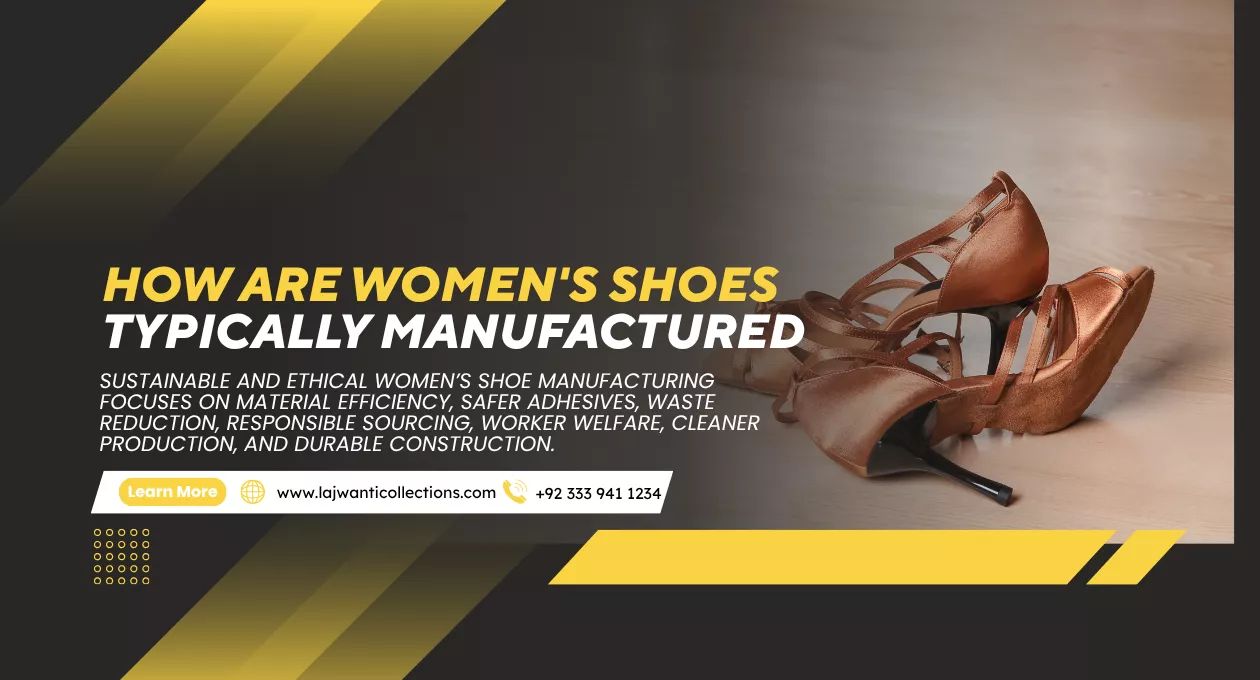
How are Women’s Shoes Typically Manufactured | Lajwant Collections
Sustainability in footwear does not only mean using a fashionable eco-word. It means reducing waste, choosing suitable materials, managing chemicals responsibly, improving packaging, and making shoes durable enough to avoid quick disposal. For Pakistani customers, longer-lasting footwear is often the most practical sustainability choice.
Ethical production also respects the people behind every pair. Clean work areas, ventilation, safe machine use, fair planning, and consistent inspection protect workers and product quality together. Lajwanti Collections can present responsible manufacturing as a promise that values both the woman wearing the shoe and the hands making it.
Booking Section for Lajwanti Collections
Customers can book or enquire with Lajwanti Collections for women’s shoes by sharing their preferred style, size, colour, occasion, and comfort needs. Lajwanti Collections can then guide them towards suitable ready-made or custom-inspired footwear options.
Ready to choose shoes that feel as good as they look? You can book an enquiry with Lajwanti Collections by sharing your size, preferred design, colour family, heel height, occasion, and comfort concerns. This helps the team suggest better options instead of pushing a random pair into your cart.
For bridal wear, festive sandals, daily flats, office shoes, or boutique-inspired designs, a short consultation can save time and disappointment. Lajwanti Collections can guide you through material choices, sizing support, finishing expectations, and order details. That way, your next pair arrives with purpose, polish, and confidence.
FAQs
How are women’s shoes typically manufactured?
Women’s shoes are typically manufactured through design, pattern making, material cutting, stitching, lasting, sole attachment, finishing, quality inspection, and packaging. Lajwanti Collections focuses on comfort, durability, and elegant finishing throughout this process.
What materials are used to make women’s shoes?
Women’s shoes are made from leather, synthetic leather, fabric, suede, rubber, EVA, foam, thread, adhesives, buckles, and decorative trims. Lajwanti Collections selects materials that suit Pakistani style, comfort needs, and daily wear.
How long does it take to manufacture women’s shoes?
Manufacturing time depends on design complexity, material availability, stitching detail, finishing, and quality checks. Simple women’s shoes may take less time, while embellished or handmade styles at Lajwanti Collections need extra care and precision.
What is the difference between handmade and machine-made women’s shoes?
Handmade women’s shoes focus on artisan detail, unique finishing, and craftsmanship, while machine-made shoes offer consistency, faster production, and standard sizing. Lajwanti Collections values both methods depending on the style, purpose, and customer need.
How can you identify well-manufactured women’s shoes?
You can identify well-manufactured women’s shoes by checking clean stitching, smooth lining, strong sole bonding, balanced shape, secure straps, neat finishing, and comfortable fit. Lajwanti Collections encourages buyers to inspect these details before purchasing.
Why does shoe construction affect comfort and durability?
Shoe construction affects how the shoe supports your foot, handles pressure, keeps its shape, and resists wear. Lajwanti Collections gives attention to stitching, cushioning, sole grip, and structure so women’s shoes feel comfortable and last longer.
What steps are involved in women’s shoe production?
Women’s shoe production includes design, prototyping, material selection, cutting, stitching, lasting, sole fixing, finishing, inspection, and packaging. Lajwanti Collections follows these steps to create stylish, comfortable, and reliable women’s footwear.